
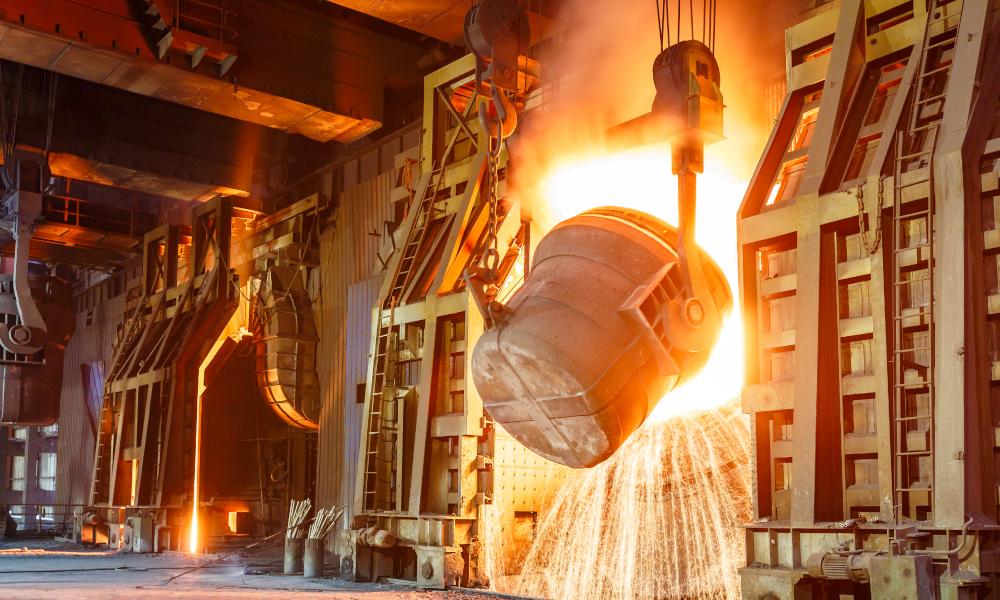
Steel, an alloy composed primarily of iron and carbon, is known for its strength and versatility. One of the key properties that make steel so useful in various industries is its melting point. In this article, we’ll explore the melting temperature of steel, the factors that affect it, and its applications in different fields.
What is the Melting Point of Steel?
The melting point of steel varies depending on its composition. Generally, the melting temperature of steel ranges between 1,370°C (2,500°F) and 1,540°C (2,800°F). Here are the melting points of some common types of steel:
- Carbon Steel: 1,425°C to 1,505°C (2,600°F to 2,740°F)
- Stainless Steel: 1,400°C to 1,530°C (2,550°F to 2,800°F)
- Tool Steel: 1,370°C to 1,520°C (2,500°F to 2,770°F)
Factors Affecting the Melting Point of Steel
- Carbon Content:
- Higher carbon content generally increases the hardness and strength of steel but can lower its melting point. Low carbon steel has a higher melting point compared to high carbon steel.
- Alloying Elements:
- Elements like chromium, nickel, manganese, and molybdenum are added to steel to enhance its properties. These alloying elements can also affect the melting temperature. For example, stainless steel, which contains chromium and nickel, has a slightly lower melting point than carbon steel.
- Impurities:
- The presence of impurities such as sulfur and phosphorus can influence the melting point of steel, typically lowering it.
Practical Applications of Steel Melting Points
Understanding the melting point of steel is crucial for various industrial applications, including:
- Manufacturing and Fabrication:
- The melting point determines the suitable methods for casting, forging, and welding steel. High-temperature processes must consider the specific melting point to avoid compromising the material’s integrity.
- Construction:
- In construction, knowing the melting point is essential for ensuring that steel components can withstand high temperatures without losing structural integrity, especially in scenarios like fires.
- Automotive and Aerospace:
- The automotive and aerospace industries use high-strength steel alloys. The melting point is a critical factor in designing components that must endure extreme temperatures and stress.
- Tool and Die Making:
- Tool steels, used in making cutting and shaping tools, need to have precise melting points to achieve the desired hardness and durability through heat treatment processes.
How to Measure Steel’s Melting Point
The melting point of steel can be determined using several techniques:
- Differential Scanning Calorimetry (DSC):
- A thermal analysis method that measures heat flow to determine melting temperatures.
- Thermogravimetric Analysis (TGA):
- Measures changes in weight as a material is heated, providing information on melting points and decomposition temperatures.
- Pyrometry:
- Uses high-temperature thermometers to measure the temperature at which steel melts.
Conclusion
The melting point of steel is a fundamental property that influences its use across various industries. Ranging from 1,370°C to 1,540°C, the melting point depends on the steel’s composition, including carbon content and alloying elements. Understanding this property is crucial for manufacturing, construction, automotive, aerospace, and tool-making applications. By knowing the specific melting point of different types of steel, industries can optimize their processes and ensure the durability and performance of steel products.
This comprehensive guide provides all the information you need about the melting point of steel, its influencing factors, and its practical applications. Use this knowledge to enhance your understanding of steel and its critical role in modern industry.